Introduction
Climate change has moved from a topic of academic debate to the defining challenge of our generation. As we observe shifting weather patterns, rising temperatures, and the melting of polar ice caps, it becomes clear that our planet is undergoing a profound transformation. This phenomenon is not merely an environmental concern; it is a complex intersection of science, economics, and human behavior that threatens the stability of our societies. By examining the current state of our environment, we can begin to comprehend the urgency of taking collective action. This article offers an in-depth look at the mechanics of our warming planet.
Climate change and global impact analysis provide the framework we need to understand how human activities are altering the atmosphere. From the industrial revolution to modern-day technological advancements, the accumulation of greenhouse gases has created a warming effect that disrupts natural cycles. Understanding this process is the first step toward building a sustainable future. As we navigate through the science, the risks, and the potential solutions, remember that climate change and global impact analysis are essential lenses through which we must view the future of energy, policy, and personal responsibility. We are at a turning point, and the data is clear.
What is Climate Change?
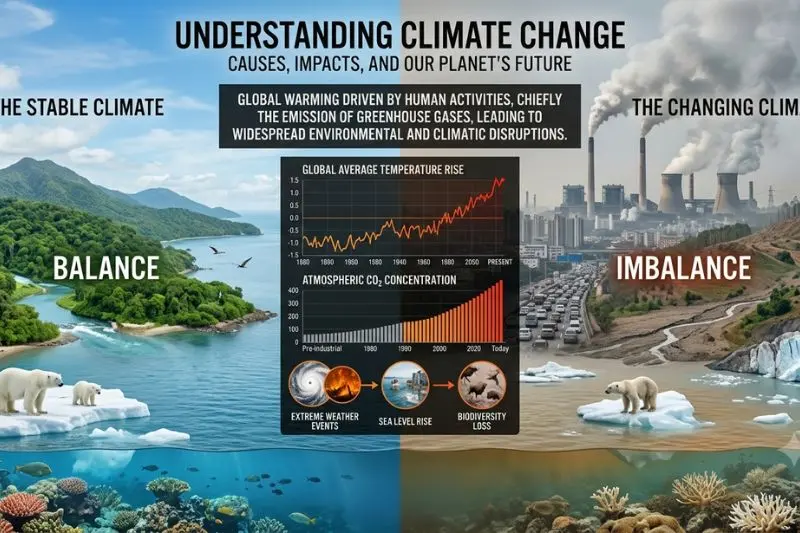
At its core, climate change refers to long-term shifts in temperatures and weather patterns. While some of these changes are natural—driven by volcanic eruptions or variations in the sun’s energy—the current trend is primarily driven by human activity. Since the 1800s, human reliance on fossil fuels like coal, oil, and gas has been the primary culprit.
When we burn these fuels, they release heat-trapping gases into the atmosphere. This process acts like a blanket wrapped around the Earth, preventing heat from escaping into space. This is often referred to as the “greenhouse effect.” Climate change and global impact analysis show us that the atmosphere is not just getting warmer; it is becoming more volatile, leading to unpredictable weather extremes.
It is important to distinguish between “weather” and “climate.” Weather is what happens outside your window on a given day. Climate, however, is the long-term average of these weather patterns over decades. When we talk about climate change, we are looking at the disruption of these established long-term averages.
Why is Climate Change Important?

The importance of climate change and global impact analysis cannot be overstated. The health of our planet dictates the health of our food systems, our water supplies, and our economies. When the climate shifts, the entire infrastructure of human civilization faces stress.
Consider the agricultural sector. Crop yields are highly dependent on predictable rainfall and stable temperatures. When climate change alters the timing of seasons or increases the frequency of droughts, food prices rise, and food security becomes threatened. This is a direct global impact that affects every household.
Furthermore, the rise in sea levels poses an existential threat to coastal cities and island nations. Millions of people live in low-lying areas that are vulnerable to flooding and storm surges. By utilizing climate change and global impact analysis, policymakers can better prepare for these shifts, protecting infrastructure and saving lives. The urgency is clear: if we do not mitigate these changes, the costs—both financial and human—will be catastrophic.
Detailed Step-by-Step Guide to Understanding Climate Trends
To grasp the full scope of the issue, we must break down the process of how climate change is measured and managed.
Step 1: Data Collection and Observation
Scientists rely on satellite imagery, weather stations, and ocean buoys to collect data. This global network provides the foundation for climate change and global impact analysis. Without precise data, it would be impossible to identify patterns in temperature or atmospheric composition.
Step 2: Modeling Future Scenarios
Once data is collected, researchers use advanced computer simulations to predict how the climate will behave under different conditions. These models help us understand the potential consequences of continuing our current habits versus transitioning to renewable energy.
Step 3: Assessing Vulnerabilities
This stage involves analyzing which regions, industries, and populations are most at risk. For instance, a coastal city in a tropical zone faces different challenges than an agricultural region in a temperate climate.
Step 4: Developing Mitigation Strategies
Mitigation involves reducing the flow of heat-trapping gases into the atmosphere. This includes shifting to solar, wind, and geothermal power, as well as increasing energy efficiency in our homes and factories.
Step 5: Implementing Adaptation Plans
Because some level of climate change is already locked in, we must also adapt. This means building resilient infrastructure, developing drought-resistant crops, and creating early-warning systems for natural disasters.
Benefits of Addressing Climate Change
When we prioritize climate change and global impact analysis, we unlock several benefits for society:
- Public Health Improvement: Reducing carbon emissions leads to cleaner air and water, significantly lowering rates of respiratory illnesses.
- Technological Innovation: The shift toward green energy creates high-quality jobs in research, engineering, and manufacturing.
- Energy Independence: Relying on domestic renewable resources reduces a nation’s dependency on volatile global oil markets.
- Biodiversity Conservation: Stabilizing the climate protects ecosystems and prevents the extinction of species that are vital to our survival.
- Economic Stability: Investing in sustainable infrastructure avoids the astronomical costs associated with frequent natural disasters.
Disadvantages and Risks of Inaction
Ignoring the reality of climate change carries significant risks that could derail global progress:
- Extreme Weather Events: Increased frequency of hurricanes, wildfires, and floods destroys property and displaces millions.
- Water Scarcity: Changing precipitation patterns result in severe water shortages, sparking regional conflicts.
- Economic Collapse: Industries such as tourism, agriculture, and fishing are highly vulnerable to environmental instability, potentially causing massive financial losses.
- Loss of Habitable Land: Sea-level rise will eventually force mass migrations from coastal regions to inland areas.
- Irreversible Tipping Points: Once certain ecosystems reach a breaking point, such as the thawing of permafrost, the resulting emissions could accelerate warming beyond human control.
Common Mistakes to Avoid
Many people misunderstand the nuances of climate change. Avoiding these errors is crucial for meaningful discussion:
- Confusing Weather with Climate: A cold winter day does not disprove long-term global warming trends.
- Assuming it is Only an Environmental Issue: Climate change is deeply tied to economics, human rights, and geopolitical stability.
- Waiting for a Silver Bullet: There is no single technological fix; solving this requires a combination of policy, technology, and lifestyle changes.
- Underestimating Local Impact: Many believe climate change only affects polar bears or distant islands, ignoring the local risks to their own infrastructure and food supply.
- Lack of Scientific Literacy: Relying on social media hearsay rather than peer-reviewed data can lead to misplaced priorities.
Is climate change really caused by humans?
Yes. The vast majority of climate scientists agree that the rapid increase in greenhouse gases since the industrial revolution is primarily due to human activity, specifically the burning of fossil fuels.
Can technology solve climate change alone?
Technology is a major component, but it cannot succeed without political will, international cooperation, and changes in individual consumption patterns.
Why is the focus on “Global Warming” often shifted to “Climate Change”?
“Climate change” is a broader term that encompasses not only rising temperatures but also the resulting shifts in weather patterns, sea levels, and ecosystem stability.
How does climate change impact the economy?
Climate change disrupts supply chains, increases insurance premiums, destroys agricultural productivity, and requires massive investments in disaster recovery.
What can an individual do to help?
Individuals can reduce their carbon footprint by choosing energy-efficient appliances, reducing waste, supporting renewable energy, and advocating for sustainable policy changes.
Are the effects of climate change reversible?
While we cannot easily undo the warming that has already occurred, we can prevent the most catastrophic future outcomes by drastically reducing emissions today.
Expert Tips & Bonus Points
To deepen your involvement with climate change and global impact analysis, consider these expert tips:
- Track Your Footprint: Use online calculators to understand how your daily choices affect the planet. Awareness is the first step to behavior modification.
- Support Local Initiatives: Often, local government policies have a more immediate impact on sustainability than global ones. Attend community meetings.
- Stay Informed: Follow reputable scientific organizations rather than opinion-based media outlets to ensure you have the most accurate, data-driven information.
- Focus on Energy Efficiency: The greenest energy is the energy you do not use. Upgrading insulation and using LED lighting are high-impact, low-effort changes.
- Advocate for Transparency: Support companies and political candidates who prioritize environmental transparency and provide data to back up their green claims.
Conclusion
Climate change and global impact analysis reveal a complex, interconnected world where our daily actions echo across the globe. We have reached a point where the choices we make today will determine the quality of life for generations to come. While the challenge is daunting, it is not insurmountable. By embracing science, fostering innovation, and committing to sustainable practices, we can transition to a cleaner, more resilient economy. The goal of climate change and global impact analysis is not to induce fear, but to provide the clarity needed to act decisively and intelligently.
The transition to a sustainable future is an opportunity to redefine how we live, work, and interact with the natural world. From the energy we use to the policies we support, every action carries weight. As we move forward, let us rely on evidence and collaboration to guide our path. The narrative of climate change is still being written, and through collective effort, we have the power to steer it toward a healthier, more stable conclusion. Staying engaged with climate change and global impact analysis ensures that we remain proactive participants in safeguarding our planet’s future.